
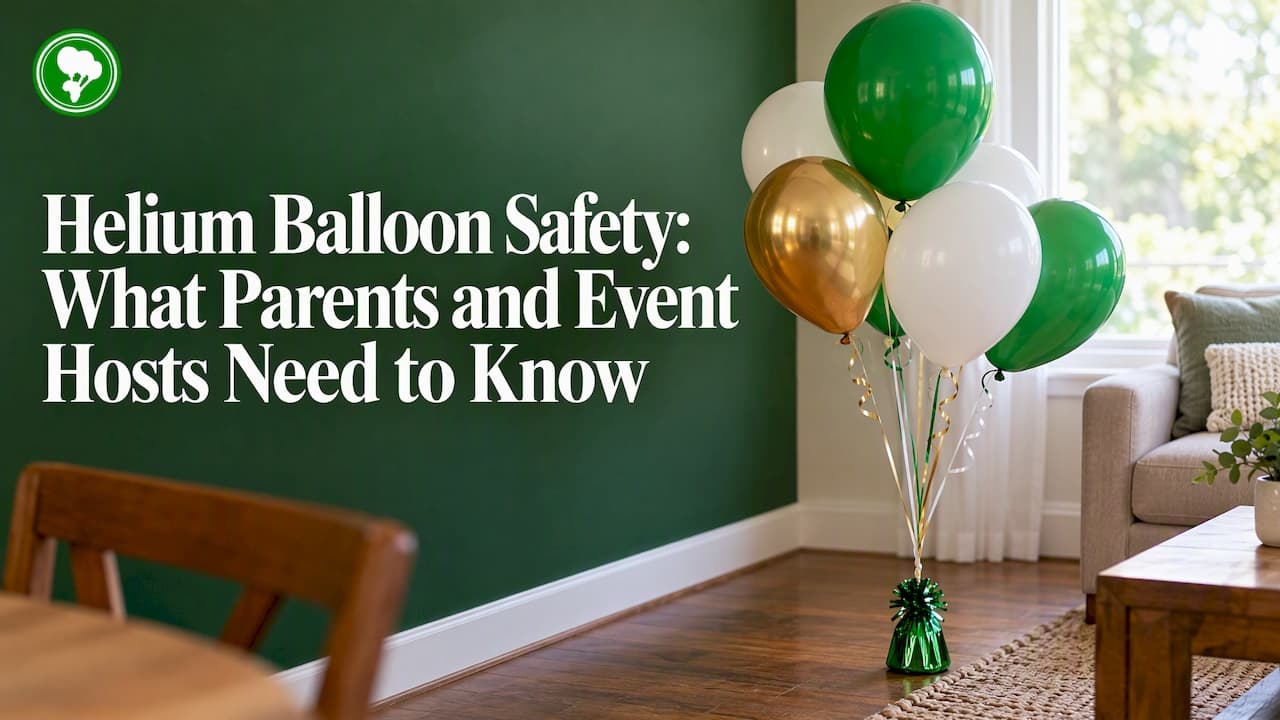
Helium balloons are safe to enjoy when you treat the gas as a gas, not a toy. Helium is non-flammable and non-toxic, but breathing it in displaces oxygen, and the real dangers are inhaling it, mishandling the cylinder, and letting small children chew on balloon pieces. This guide covers each risk in plain terms, with what to do at home, in the car and at a venue.
Key takeaways
- Never let anyone inhale helium from a balloon or a cylinder. Even a small amount can cause dizziness, and cylinder gas can cause serious injury.
- Store cylinders upright, chained, in a ventilated area, with the safety cap on, and move them only on a secured trolley.
- Keep burst or deflated latex away from babies and toddlers, and supervise young children around all balloons.
- If a tank is not needed, air-filled balloons on sticks, arches and garlands remove most of these risks.
Table of Contents
- Why inhaling helium is dangerous
- Balloon safety for kids
- Handling helium cylinders safely in South Africa
- Driving with helium balloons and cylinders
- Disposal and releasing balloons outdoors
- Our perspective: often, you do not need a tank at all
- Helium-free options for kids' parties and promotions
- FAQ
- Sources
Why inhaling helium is dangerous
The party trick of a squeaky voice is the biggest helium risk. Helium is odourless and colourless, with no warning properties, so it can displace oxygen and cause suffocation without a person noticing.
What happens in practice:
- From a balloon: small amounts can cause headaches, dizziness and nausea. Fainting is a second risk, because a fall can cause a head injury.
- From a cylinder: gas under pressure can cause lung damage or gas bubbles in the blood, which may lead to strokes.
- Children: in the United States, most helium-inhalation injuries seen in emergency departments between 2000 and 2019 involved boys aged 6 to 12.
The simple house rule: balloons are for holding, not breathing. Say it out loud at the party, especially to the 8 to 12 year olds who think it is funny.
If someone feels faint, dizzy or has trouble breathing after inhaling helium, move them into fresh air, get them seated or lying down so they cannot fall, and call emergency services if symptoms do not pass quickly or they lose consciousness.
Balloon safety for kids
Choking on latex
The most common balloon danger for small children is not helium at all. A popped latex balloon leaves soft fragments that can block an airway. Pick up every scrap straight after a pop, and keep balloons out of reach of babies and toddlers, including newborns in prams or car seats.
If a child is conscious but cannot cough, speak or breathe, South Africa's Primary Healthcare standard treatment guidelines describe the response:
- Child: up to five abdominal thrusts, then, if that fails, up to five back slaps. Repeat the cycle until the object clears or the child becomes unconscious.
- Infant: five back slaps followed by five chest thrusts, repeated the same way.
A first aid course teaches this hands-on, and that is far better than reading it once. If you host children's parties or run a kids' menu promotion, having a trained adult on site is cheap insurance.
Is a helium balloon safe for a newborn?
A sealed balloon floating well above a cot is a decoration. A balloon within a newborn's reach is a hazard, because of the latex and the string. Tie ribbons short, anchor weights on the floor, and never leave a baby alone with balloons. Gift balloons for new mums are best kept in the lounge, not the nursery.
Strings, weights and supervision
Long ribbon can wrap around fingers or necks. Use short ribbons for young children, and weights heavy enough that a toddler cannot drag the bunch around. Foil balloons that drift into power lines can cause outages and fires, so keep them secured and indoors when you can.

Handling helium cylinders safely in South Africa
If you fill balloons yourself with a hired or bought cylinder, handle it like any compressed gas. South African workplace safety guidance says cylinders must be stored upright, chained securely, in a well-ventilated area away from combustible materials. The same handbook asks for protection from weather, clear "No Smoking" and "No Naked Flames" signs, and separate areas for full and empty cylinders.
A practical checklist:
- Keep the cylinder indoors, dry and upright, chained to a wall or a stand. A falling cylinder can break its valve.
- Leave the safety cap on whenever you are not filling.
- Do not lift large cylinders by hand. Use a trolley with a strap.
- Keep it away from heat, flames and wet areas where rust can weaken the metal.
- Open the valve slowly, and never point the nozzle at a person or breathe from it.
- Return empty cylinders to the supplier. Do not try to dispose of them with household waste.
The design and maintenance of transportable gas cylinders in South Africa falls under SANS 10019, so use a supplier who tests and certifies theirs. Businesses that handle waste from hazardous substances, which includes compressed gas containers, must follow the Hazardous Chemical Substances Regulations and use designated, safe disposal facilities.

Driving with helium balloons and cylinders
Inflated balloons are not dangerous in a car, but they are a distraction. Keep them from blocking the rear window and the driver's view of the mirrors, and do not let them float around the driver's face. A boot or back seat with the seats down works best.
A cylinder needs more care. The workplace handbook says compressed gas cylinders should only be moved on approved, secured trolleys, with safety caps in place. In a vehicle, that means upright and strapped so it cannot roll, with the windows slightly open. Our balloon transport tips cover how to get inflated balloons to the venue intact.
Disposal and releasing balloons outdoors
Do not release balloons at an event. They come down as litter, and animals can swallow the pieces. Pop them, bin the fragments, and keep foil balloons for the general waste. We explain what is realistic in our guide on recycling balloons in South Africa.
The labelling rules abroad show how seriously regulators take helium. In the United Kingdom, helium balloons made for children's play are toys that need warnings about inhalation risks. New Zealand recommends a bold "do not inhale" warning on cylinders and packaging. Whatever the local rule, put the same warning on the table at your own event.
Our perspective: often, you do not need a tank at all

Most of the helium risks above come from the cylinder and from the temptation to inhale. In our experience supplying events, corporate functions and weddings, many of the looks people want, such as arches, garlands, columns and table pieces, work better with air-filled balloons. They last longer than helium floaters, they need no gas handling, and nobody can inhale anything.
We make our latex balloons from sustainable rubber tree sap, so they are 100% natural and biodegradable, and they are EN71 certified. We offer over 50 colours, so you can colour-match without a gas tank. If you do want floaters, buy fresh, good-quality latex, seal it properly (see our balloon sealing methods), and follow the cylinder rules above. For a full comparison, read helium vs. air balloons.
— Richard
Helium-free options for kids' parties and promotions
For children's events and restaurant kids' menus, air-filled balloons on sticks or string are the safer pick: no gas, no floating bunches near ceilings, and an easy handover to a child with adult supervision. See balloon sticks or string for events and helium-free balloon ideas for set-ups that look polished.
We print logos and artwork on balloons, and supply stress balls, shakers and inflatables as alternatives. Browse our biodegradable latex balloons, or see branded promotional balloons and event décor to plan an order for your event.
FAQ
Is a helium balloon safe for children?
Yes, if an adult supervises and nobody inhales the gas. The main risks are inhaling helium and choking on burst latex. Pick up fragments straight away and keep balloons away from babies and toddlers.
Is it safe to inhale helium from a balloon?
No. It can cause dizziness, headaches, nausea and fainting, and in rare cases serious harm, because helium takes the place of oxygen. Cylinder gas is more dangerous than the contents of a balloon.
How should I store a helium cylinder at home?
Keep it upright, chained to a wall or stand, in a dry, ventilated, indoor spot away from heat and flames. Leave the safety cap on and keep it out of children's reach.
Is it safe to drive with helium balloons?
Inflated balloons are fine as long as they do not block your view or touch you while driving. Pack them in the boot or on the back seat. Cylinders must be upright and strapped down.
Sources
- Technical Guidelines for Helium Gas Safety, Dubai Municipality
- Helium, Missouri Poison Center
- Helium Voice or other effects, BBC
- Inhaling Helium, Healthline
- PHC Chapter 21: Emergencies and injuries, National Department of Health
- Management Handbook, SHE manual
- Regulation Gazette No. 8057 (SANS 10019)
- Regulations for Hazardous Chemical Substances
- Dangers of helium balloons, British Retail Consortium
- Helium safety advice, New Zealand Product Safety