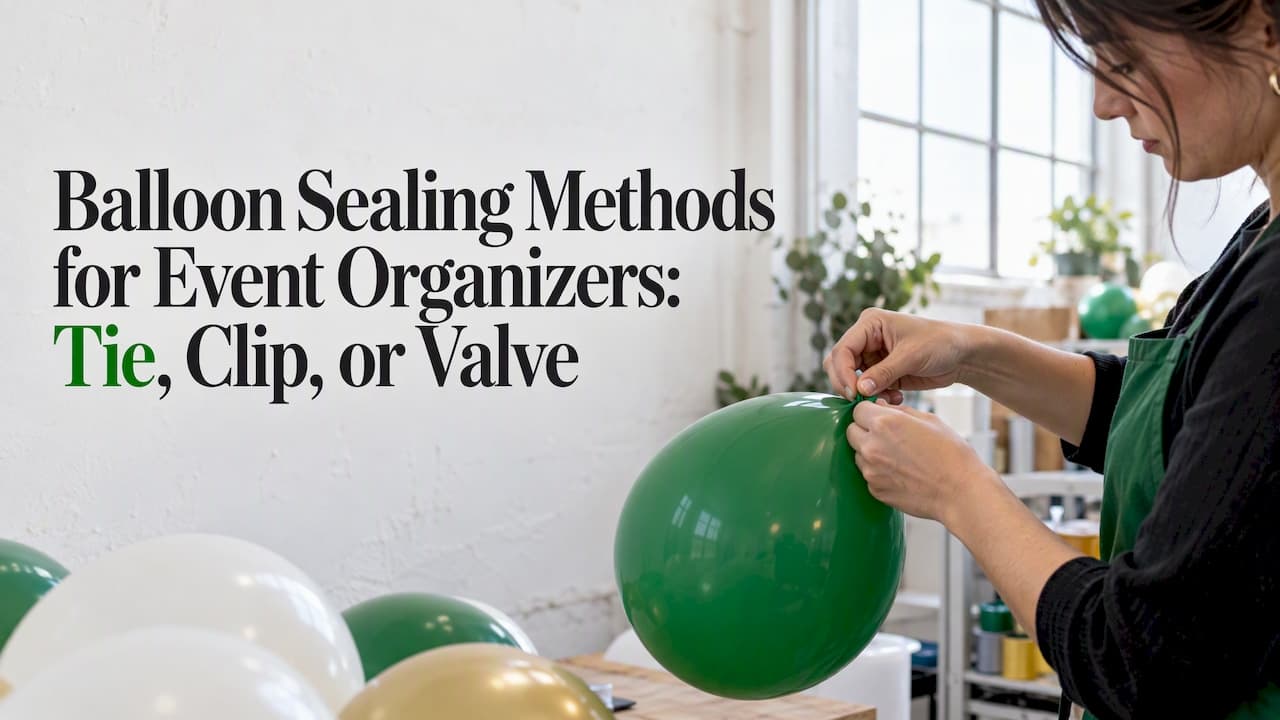
For latex balloons, hand-tie single-use pieces and switch to clips or valves when speed matters for larger batches. For foil balloons, use the built-in self-seal valve first and treat heat-sealing or clips as a backup only. For bubble or clear balloons holding lights or flowers, use low-profile clips or a careful double-knot, and always keep heat away from the insert.
TL;DR:
- Inflate latex balloons to about 80% before tying, and stretch mini balloon necks gently because thin latex tears more easily.
- Press a foil balloon’s valve for 3 to 5 seconds; if it leaks, use a clip or apply low heat for one to two seconds.
- For bubble balloons with lights or flowers, inflate slowly, use a narrow clip or adhesive tab, and keep heat away from wires and battery packs.
- Replace foil balloons with seam tears longer than a centimeter instead of repeatedly resealing them, since damaged seams will not hold for long.
- Weight helium balloons to prevent them from drifting into power lines, and never release balloons outdoors because fragments become litter and choking hazards.
Table of Contents
- Sealing latex balloons: step-by-step methods
- Sealing foil (mylar) balloons: valves, heat sealing and workarounds
- Sealing bubble and clear balloons with lights, roses or other inserts
- Tools and supplies: build a small sealing kit for events
- Troubleshooting common sealing problems and quick fixes
- Safety and environmental best practice when sealing and using balloons
- Manufacturer perspective: how product choice affects sealing and display results
- What experienced organisers prioritise
- Order sealed balloons and accessory kits instead
- FAQ
- Sources
Sealing latex balloons: step-by-step methods
Hand-tying remains the most reliable seal for a single latex balloon, and it costs nothing extra. Here is the method that holds up best:
- Inflate the balloon to roughly 80% of its full size so the latex has room to stretch without weakening the neck.
- Pinch the neck between your thumb and forefinger to stop air escaping.
- Stretch the neck slightly, then wrap it around two fingers to form a loop.
- Pull the tip of the neck through the loop and tighten into a firm knot.
- Tug gently to check the knot holds before releasing your grip.
For bulk work, reusable plastic valves or one-time balloon clips save real time. Push the inflated neck into the clip's slot until it clicks into place, or slide it through a valve until the ridge locks the air in. Both methods avoid the finger strain that comes with tying dozens of knots by hand.
Narrow-neck or mini latex balloons need gentler handling since the thinner latex tears more easily near the tie point. Stretch the neck less than usual and knot slowly rather than pulling hard in one motion.

Hand-tying looks neater for display pieces and photographs, while clips win on speed when you are filling a large order. A skilled hand-tie takes several seconds; clips take about half that time, which adds up quickly across many balloons.
Pro Tip: Wet your fingers slightly before tying; damp latex grips itself better and slips less during the final knot.
Sealing foil (mylar) balloons: valves, heat sealing and workarounds
Most foil balloons come with a self-seal valve built into the neck, and that valve should always be your first option. After inflating with a pump or helium tank, press the two sides of the valve together firmly for a few seconds to let the internal adhesive bond.
- Inflate until the balloon is firm but not stretched tight at the seams.
- Press the valve flat between your fingers for 3 to 5 seconds.
- Run a finger along the seal to check for any gap where air could escape.
- If air still leaks, move to a backup method rather than re-pressing repeatedly.
When a valve fails to seat properly, a few workarounds help:
- Insert a plastic straw into the neck, inflate, then pull the straw out quickly while pinching the opening shut, followed by a clip.
- Apply a sealing clip directly over the neck for a fast, tool-free close.
- Use a low-heat sealer or the edge of a cool iron for one to two seconds, just enough to fuse the film without melting it.
Keep heat brief and low, since foil film scorches or develops pinholes under too much contact. Check the seams, not just the neck, for small holes; a faint hiss or a soapy water test will reveal them. If the seam itself is damaged rather than just the valve, resealing will not hold for long and the balloon is better replaced.
Sealing bubble and clear balloons with lights, roses or other inserts
Bubble balloons holding fairy lights, dried flowers or confetti need a gentler touch than standard latex or foil, since the goal is protecting the insert as much as closing the neck.
- Position the insert in the centre of the balloon before inflating, and hold it steady with one hand while air fills the shell.
- Fold the neck gently rather than stretching it hard, since bubble material tears more easily than latex.
- Use a narrow clip or a low-profile adhesive tab instead of a tight hand-knot, which can pull the insert off-centre.
- Inflate slowly with a hand pump rather than a fast compressor burst to avoid jostling lights or stems.
- Keep any heat source well away from LED wires or battery packs, since heat near electrical components risks damage.
If the neck slips after sealing, a second clip placed just below the first usually holds. If the insert shifts during inflation, deflate slightly, reposition by hand, then reinflate in smaller stages.
Pro Tip: Chill bubble balloons slightly before filling them with inserts; the material stiffens just enough to make positioning easier.
Tools and supplies: build a small sealing kit for events
A compact kit covers nearly every sealing job you will face at an event:
- A hand pump for controlled, low-pressure inflation.
- A tying tool, which saves finger strain on large latex orders.
- Balloon clips in a few sizes, for latex, foil and bubble necks.
- A low-temperature heat sealer or a cool iron edge for foil repairs.
- Adhesive tabs for delicate bubble balloons with inserts.
- Scissors for trimming ribbon and excess neck material.
- Weights, since helium balloons need secure anchoring at every event.
Reusable valves suit repeat events where speed matters more than a polished knot, while single-use clips work well for one-off displays where neatness counts. Look for clips with firm, consistent grip and valves that seat cleanly without forcing, since loose-fitting hardware causes most on-site leaks. Store clips and sealers in a dry container away from direct sun, since heat and humidity shorten their working life.
Troubleshooting common sealing problems and quick fixes
A slow leak is the most common complaint, and it is usually easy to trace.
- Mix a little washing-up liquid with water and dab it along the neck and seams; bubbles reveal the exact leak point.
- Check the knot or valve first, since most failures sit there rather than in the balloon body.
- Reseat a foil valve by pressing firmly for a few extra seconds.
- Apply a clip over a failing hand-tied knot rather than re-tying, which can weaken already-stretched latex.
- Heat-seal a small foil gap for one to two seconds if the valve itself is intact but the seam nearby has lifted.
If a latex balloon has a small puncture rather than a seal failure, it is rarely worth saving for display, but slightly underinflated or marked balloons still work well in garlands where imperfections are hidden among others. When a seam tear runs more than a centimetre or a foil balloon has lost significant pressure overnight, replacing it is safer and faster than repeated resealing attempts.
Pro Tip: Test a handful of balloons from each new batch before committing to a full display; a weak lot usually shows itself within the first few ties.
Safety and environmental best practice when sealing and using balloons
- Never release balloons outdoors, since government guidance treats released balloons as litter in some areas and recommends indoor use or secure fastening outdoors.
- Always weight helium balloons, since foil balloons are electrically conductive and can cause power outages or fires if they drift into overhead lines.
- Choose natural, biodegradable latex for displays where possible, since NABAS guidance notes that latex degrades naturally while foil and bubble materials do not.
- Never inhale helium, and supervise children closely around any inflated balloon.
- Dispose of broken fragments and spent clips responsibly, since loose pieces are a choking hazard and an environmental hazard once outdoors.
There is no reliable evidence that hairspray prevents balloon deflation, according to official environmental guidance, since deflation mainly comes from material permeability or an imperfect seal rather than surface treatment.
Manufacturer perspective: how product choice affects sealing and display results
Natural latex, sourced from rubber tree sap, knots and stretches differently from foil or bubble film, which is one reason hand-tying still works best on latex while foil almost always needs its built-in valve. Valve design and balloon gauge decide the right method for a given job:
- Thin-gauge latex calls for gentler stretching and slower knotting to avoid tears.
- Heavier decor-grade latex tolerates clips and valves without weakening.
- Pre-sealed or pre-filled options save setup time on large orders and reduce handling errors.
- Balloons made to EN71 quality standards tend to seal more predictably, since consistent wall thickness means fewer surprise weak points.
We work with biodegradable latex in a wide range of colours, so organisers can match a palette while sticking to natural, compostable material.
What experienced organisers prioritise
Sealing a hundred balloons by hand is not where your time belongs on event day. We mix hand-tying for display pieces that need a polished finish with clips for the bulk of a large order, which keeps quality high without burning hours. For big installs, ordering pre-sealed pieces or bringing in a decor team is often the better trade of time and money. Two habits save real effort: testing a handful of balloons from each fresh batch before committing, and keeping sealing tools sorted by type so nobody hunts for a clip mid-setup.
— Richard
Order sealed balloons and accessory kits instead
Skipping hours of hand-tying is simple when you order balloons that arrive ready to use. We supply biodegradable latex balloons made from sustainable rubber tree sap, alongside accessory kits, clips and foil options through our full catalogue.

- Biodegradable latex balloons in a wide range of colours, certified to quality standards.
- Branded promotional balloons and a decor line for events, weddings and corporate functions.
- Event decor support available, plus accessory kits for organisers handling their own sealing.
For coordinated event touches beyond balloons, pairing décor with custom party treats rounds out a celebration table nicely. Browse our shop page for foil and latex supplies ready to order today.
FAQ
How do you seal foil balloons?
Most foil balloons seal through a built-in valve: press the two sides together firmly for a few seconds after inflating until the internal adhesive bonds. If the valve will not hold, a clip, a brief low-heat seal, or the straw-and-clip method work as backups.
Why should we stop using helium balloons outdoors?
Released balloons are treated as litter in some jurisdictions and the broken fragments become choking and environmental hazards once they fall back to earth. Helium-filled foil balloons are also electrically conductive and can cause power outages if they drift into overhead lines, so weighting them is essential.
What can I tie balloons together with?
Balloon clips, reusable plastic valves and simple hand-tied knots are the most common ways to join or close latex balloons. For garlands or clusters, many organisers combine hand-tying with clips to balance speed and a tidy finish.
Does hairspray keep balloons from deflating?
No. Official environmental guidance confirms there is no reliable evidence that hairspray prevents deflation, since air loss mainly comes from material permeability or an imperfect seal rather than any surface coating.
Is it safe to heat-seal a balloon at home?
A low-temperature heat sealer or the cool edge of an iron works safely on foil balloons with just one to two seconds of contact, enough to fuse the film without scorching it. Keep heat away from any electrical inserts, such as LED lights, since prolonged or direct contact risks damage or burns.