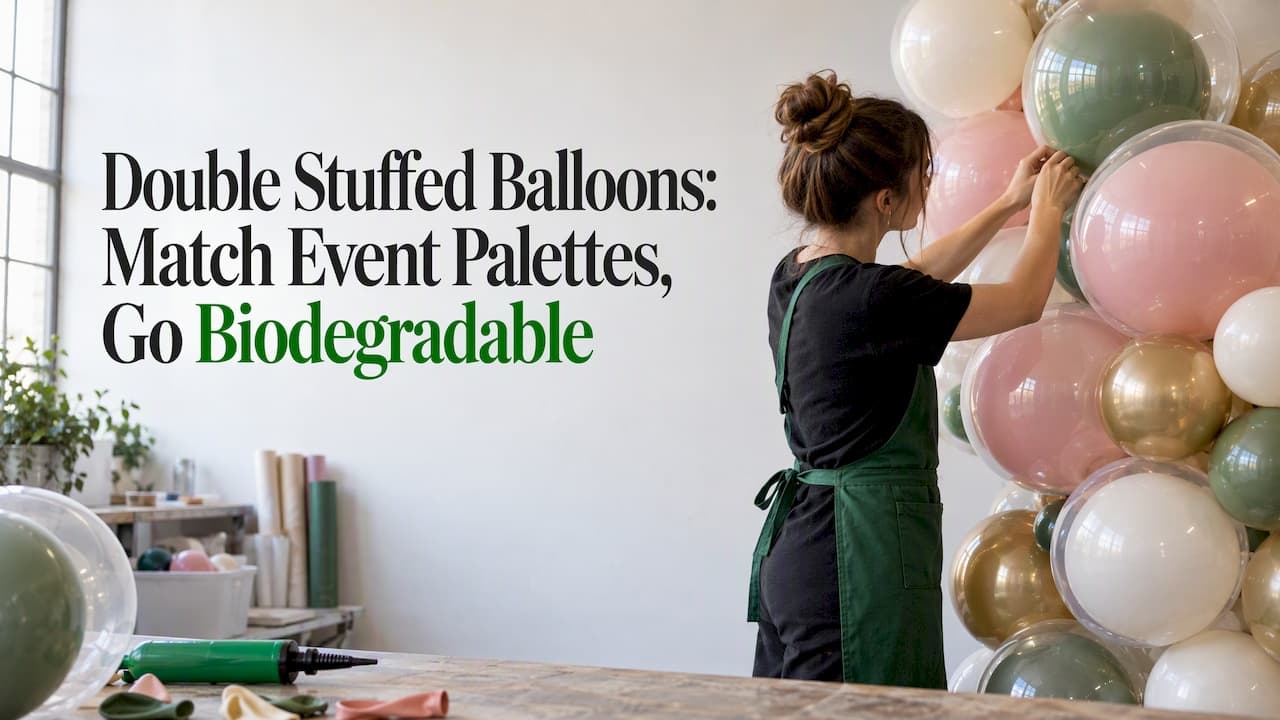
A double stuffed balloon is two balloons nested together before inflation, usually a coloured or metallic shell over a contrasting inner layer, to create a richer two-tone or pearlised finish than a single balloon can give. Event planners choose them for stronger colour depth and a more polished look on arches and garlands. For a quick project, a prepacked kit works well; for weddings, launches or branded events, ordering custom biodegradable balloons built around your exact palette gets a more reliable result.
TL;DR:
- Most double stuffed balloons are best used for static displays like arches, garlands, and backdrops, since air-filled versions can last days indoors.
- Combining specific color pairings, such as navy with gold or pastel shades, and choosing finishes like matte or pearl, significantly enhances visual depth and style.
- Proper nesting and slow inflation with a pump are crucial to prevent popping, with smaller test batches recommended to troubleshoot color or sizing issues.
- Ordering custom biodegradable balloons that match exact palettes offers greater consistency, safety certification, and environmental benefits over retail kits.
- Delivery timing should align with balloon fill type, with helium balloons needing to arrive close to the event to maintain buoyancy, especially outdoors or in warm conditions.
Table of Contents
- What double stuffed balloons are and when to use them
- Colour pairings and finishes: how to pick inner and outer balloons
- How to make double-stuffed balloons: step-by-step DIY and pro tips
- Kits, prepacked options and where to buy
- Installation, lifespan and delivery timing for events
- Why choose biodegradable customised double-stuffed balloons
- Care and storage tips to prolong balloon life before use
- Safety considerations when inflating and handling double stuffed balloons
- Troubleshooting common issues like popping or deflation
- When to DIY and when to hire a pro
- How Balloon & Printing Manufacturers can help
- FAQ
- Sources
What double stuffed balloons are and when to use them
The technique is straightforward: you slide one balloon inside another, then inflate both together so the outer skin stretches over the inner colour, producing a blended or pearl-like tone that a single balloon cannot replicate. Tutorials recommend treating the inner balloon as the "base" colour and the outer as the "finish" colour, since the outer layer determines most of the visible sheen, while the inner layer shows through as depth or shadow, according to Balloonese's double-stuffed balloon tutorial.
Double stuffed balloons turn up most often in these settings:
- Balloon arches that need visual weight and saturated colour from a distance.
- Garlands strung along tables, stages or entrances.
- Duplets and clusters used as standalone accents or photo-wall fillers.
- Backdrops where a dense, textured wall of colour is the goal.
Whether to fill with air or helium depends on the build. Air-filled designs sit on frames, arches or stands and hold their shape for days, which suits garlands and backdrops that do not need to float. Helium is reserved for freestanding clusters or balloons meant to drift above a display, since it adds buoyancy at the cost of a shorter usable life.
Colour pairings and finishes: how to pick inner and outer balloons
The inner balloon shows through the outer skin, so pairing choices change the final tone more than most people expect. A white inner under a translucent outer gives a soft pearl effect, while a dark inner under a pale outer creates a shadowed, almost marbled look. Matching inner and outer in the same colour family deepens the shade without changing the hue.
A few palettes come up again and again in retail kits and event work:
- Dusty rose with champagne or gold, a soft, warm combination suited to weddings and baby showers.
- Navy with gold or metallic accents, a higher-contrast pairing used for corporate launches and milestone parties.
- Neutral tones with champagne or nude, popular for minimalist or editorial-style décor.
- Pastel duos, such as blush and lilac, for gender reveals and children's parties.
One consistent pattern across marketplace listings is that dusty pastels, navy-and-gold, and neutral-with-metallic pairings are among the most frequently sold double-stuffed kit palettes, reflecting demand for both soft, romantic looks and bolder brand-ready contrasts, as shown in Walmart's double-stuffed balloon listings.
Finish matters as much as colour. Matte gives a flat, modern look; pearl and metallic add shine that reads well in photos; translucent layers let the inner colour glow through, which is what produces the signature double-stuffed effect in the first place. As a rule, keep contrast deliberate: pair a translucent or pastel outer with a bold inner for depth, but avoid stacking two strong, competing hues unless you are matching a specific brand palette.

How to make double-stuffed balloons: step-by-step DIY and pro tips
Before you start, gather the basics: balloons in two complementary colours and matching sizes (11 inch is the most common for garlands), a hand or electric pump, glue dots, balloon strip tape, and a frame or arch structure if you are assembling a larger installation.
- Choose your pair. Pick an inner balloon for depth and an outer balloon for finish, matching sizes so the inner one sits flush inside the outer.
- Prepare the inner balloon. Partially stretch it by hand to loosen the latex, which reduces the risk of the outer balloon tearing during inflation.
- Nest the balloons. Slide the inner balloon fully inside the outer one, lining up both necks so you can tie them together as a single unit.
- Inflate slowly. Use a hand pump rather than your lungs for consistent pressure, and stop just short of full size to avoid stressing the latex.
- Tie and test. Knot both necks together, then gently squeeze to check the seal before adding it to a garland or arch.
- Assemble in clusters. Group three to five double-stuffed balloons per cluster, using balloon tape or netting to anchor them to a frame or wire with even spacing.
Running a small sample batch before committing to a full garland or arch is standard advice in most technique guides, since it catches colour mismatches or popping issues before they affect the whole installation, per Balloonese's step-by-step method.
For air-filled builds, slightly under-inflating each balloon reduces pressure on the double layer of latex and extends how long the piece holds its shape. Helium builds need a firmer fill for buoyancy, but that firmness shortens the display window, so timing matters more.
Pro Tip: Assemble your garland or arch as close to delivery or event start as practical, since even air-filled double-stuffed balloons look their best soon after inflation.
Kits, prepacked options and where to buy
A typical prepacked kit includes a set number of balloons in two or three colours, often with strip tape, glue dots and sometimes a small hand pump bundled in, aimed at DIY garlands or arches of a fixed size, as seen across marketplace double-stuffed balloon kits.
Weighing a kit against a custom order comes down to a few trade-offs:
- Kits are convenient and ready to ship, but colour options are limited to what is in stock.
- Custom orders give exact colour matching, useful when you are working to a brand palette or a specific wedding theme.
- Material claims vary by supplier, so check for stated biodegradability and certification rather than assuming every latex balloon qualifies.
- Assembly extras differ, with some kits including tape and adhesives and others requiring you to source them separately.
If biodegradability or safety certification matters for your event, ask the supplier directly whether balloons are made from natural rubber latex and whether they carry EN71 certification, rather than taking "eco-friendly" labelling at face value. For event-scale work where colour accuracy and sustainability claims both matter, ordering custom biodegradable balloons built to your palette is a more dependable route than relying on whatever a retail kit has in stock.
Installation, lifespan and delivery timing for events
Air-filled double-stuffed installations generally hold their shape and colour for several days, making them practical for multi-day events or early setup. Helium-reliant builds lose buoyancy faster, so vendor guidance on delivery timing recommends scheduling helium assembly as close to the event start as logistics allow.
Heat, direct sun and humidity all shorten display life regardless of fill type, since latex expands and weakens faster in warm conditions. Indoor, climate-controlled venues extend the usable window noticeably compared with outdoor setups in full sun.
A few points worth matching to your event type:
- Same-day weddings and launches: schedule helium builds for delivery within hours of the event.
- Multi-day exhibitions or retail displays: choose air-filled garlands or arches for consistency over several days.
- Outdoor events: ask your vendor about expected lifespan under sun and heat before confirming a delivery slot.
Asking a supplier directly whether a design is air- or helium-based, and what lifespan to expect under your venue's conditions, is the simplest way to avoid an installation that droops before guests arrive, per guidance on balloon delivery timing.
Why choose biodegradable customised double-stuffed balloons
Our balloons are made from biodegradable latex sourced from sustainable materials, which matters when a client or venue asks about environmental impact rather than just appearance. A wide colour range can provide enough depth to match many brand palettes or event themes precisely, rather than settling for the closest available stock colour.
Some balloons carry EN71 certification, the standard most relevant to material and safety quality in party and decor products. For planners managing multiple events, working with decor teams who handle both material sourcing and on-site assembly reduces the coordination load compared with sourcing balloons and labour separately.
What this means in practice for a planner:
- Consistent sourcing means colour and material quality do not vary between orders.
- Certification gives a verifiable answer when a client or venue asks about safety standards.
- Decor teams handle installation, removing the guesswork from large-scale arches or garlands.
Care and storage tips to prolong balloon life before use
Keep uninflated balloons in a cool, dark place away from direct sunlight, since UV exposure degrades latex even before inflation. A cupboard or storage box works better than an open shelf near a window.
Avoid storing balloons near sources of ozone, such as motors, photocopiers or certain cleaning products, as ozone breaks down latex faster than most people expect. Humidity also affects shelf life, so a dry environment extends how long balloons stay pliable and easy to inflate without tearing.
Once inflated, double-stuffed balloons benefit from staying indoors or in shaded areas until delivery or setup. If you are prepping balloons a day or two ahead of an event, store finished clusters in a cool room rather than a car boot or garage, where temperature swings are more extreme.
A light dusting of talcum-free balloon treatment spray, where available, can reduce static and extend shine on metallic or pearl finishes, though this is optional rather than essential for most events. For anyone prepping balloons well in advance, testing a small batch under your actual storage conditions tells you more about expected lifespan than any general guideline.

Safety considerations when inflating and handling double stuffed balloons
Over-inflating a double-stuffed balloon is the most common cause of injury, since the extra layer of latex means more tension builds before the balloon visibly looks full. Stop inflating slightly before the balloon feels tight, and always use a pump rather than your mouth for anything other than a quick single balloon.
Keep children away from uninflated or popped balloon pieces, since small fragments are a choking hazard, a standard warning across balloon safety guidance generally. Adults assembling arches or garlands should wear eye protection when using electric pumps at higher pressure settings, since a sudden pop at close range can cause minor injury.
Helium tanks require their own handling care: keep them upright, store in a ventilated area, and follow the manufacturer's instructions for pressure release. Never inhale helium from a balloon or tank, a hazard that applies regardless of fill type or balloon brand.
For large installations on ladders or frames, secure the structure before adding weight from balloon clusters, since an unbalanced frame is a more likely source of injury than the balloons themselves.
Troubleshooting common issues like popping or deflation
Popping during inflation is usually caused by one of three things: over-inflating, a sharp edge on jewellery or fingernails during handling, or stretching the inner balloon too aggressively before nesting it inside the outer one. Slowing the pump speed and checking your hands for anything sharp before handling solves most of these cases.
Uneven colour blending, where the inner balloon does not show through evenly, often comes down to mismatched sizes between inner and outer balloons. Using the same size for both, as most technique guides recommend, keeps the stretch even across the whole surface.
Premature deflation is more often a storage or temperature issue than a manufacturing fault. Balloons exposed to heat or direct sun lose air faster, so a garland that looked perfect at setup but sags within hours was likely displayed somewhere warmer than ideal.
If a cluster looks patchy rather than fully deflated, check for a slow leak at the neck knot rather than assuming the latex itself has failed. A firmer double knot, rather than a single loop, usually resolves this on future builds.
When to DIY and when to hire a pro
DIY kits make sense for small, low-stakes projects where a little colour mismatch or an uneven cluster will not matter. For weddings, product launches or anything with a brand palette to match exactly, a professional supplier reduces the risk of wasted time and mismatched tones, and brings sustainability credentials a retail kit rarely offers.
Lead times matter more than people expect. Large installations need booking well ahead, since sourcing specific colours and staffing a decor team both take planning.
— Richard
How Balloon & Printing Manufacturers can help
The balloons offered include biodegradable latex sourced from sustainable materials, with a wide colour selection and options for custom printed designs for branded events, weddings and promotional work. Decor teams can handle on-site assembly for arches, garlands and backdrops, and some balloons carry EN71 certification for material quality.

If you are planning an event and want double-stuffed balloons that match an exact palette rather than whatever a retail kit has in stock, our biodegradable latex balloons page is the place to start. For promotional or branded work, browse our full product catalogue, which covers decor balloons, accessories and printed inflatables. Those planning a full celebration sometimes also look at complementary touches such as themed cake pops or curated baby shower gifts to round out the day.
When you enquire, have your event date, venue type, preferred colours and approximate balloon count ready, since this speeds up quoting and confirms lead times. For DIY buyers after individual balloons or accessories rather than a full décor service, our shop page covers foil and coloured latex options directly.
FAQ
What is the point of double stuffed balloons?
Double stuffed balloons create a richer, two-tone or pearlised colour effect that a single balloon cannot produce, which makes arches, garlands and backdrops look more polished and saturated. Planners use them specifically when a brand palette or theme needs more visual depth than a single-colour balloon gives.
How do you make double stuffed balloons?
You place one balloon inside another, matching sizes so the inner layer stretches evenly, then inflate both together as a single unit before tying the necks off together. Running a small sample batch first helps catch sizing or colour issues before you commit to a full installation, according to Balloonese's tutorial.
How do you inflate double stuffed balloons without popping them?
Use a hand or electric pump rather than your mouth, and inflate slowly to avoid overstressing the doubled latex layer. Stop just short of full size, since double-stuffed balloons reach visible tension earlier than single balloons of the same diameter.
What is a stuffing balloon?
A stuffing balloon is simply the inner balloon placed inside an outer one before inflation, chosen for how its colour shows through the outer skin. The inner balloon typically determines the depth or shadow tone, while the outer balloon sets the finish and sheen.
Should I use air or helium for a double-stuffed balloon installation?
Air-filled installs last several days and suit arches, garlands and backdrops that do not need to float, while helium is better reserved for freestanding clusters that need buoyancy. Vendor guidance recommends asking directly whether a design is air- or helium-based, since that affects both expected lifespan and recommended delivery timing, per guidance on balloon delivery and lifespan.